
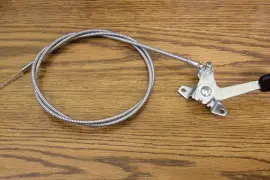
A few days ago, my lawnmower throttle cable became stuck and it created difficulties for me to control the mower. I tried to operate the mower several times but the throttle cable didn’t respond properly.
Basically, the throttle lever controls the mower engine speed as well as the blade speed. It also regulates the engine fuel consumption in the time of mowing. And trouble in the throttle cable actually creates trouble in the entire lawnmower.
Whatever, do you face the same issue? I guess so. Then no need to be anxious. Fixing a lawnmower throttle cable is a simple task but you need a perfect guideline to do that.
In this article, I will give you a perfect guideline on how to fix a lawn mower throttle cable.
So, without delay, let’s fix it.
In this content you’ll learn:
Guideline To Fix A Lawnmower Throttle Cable
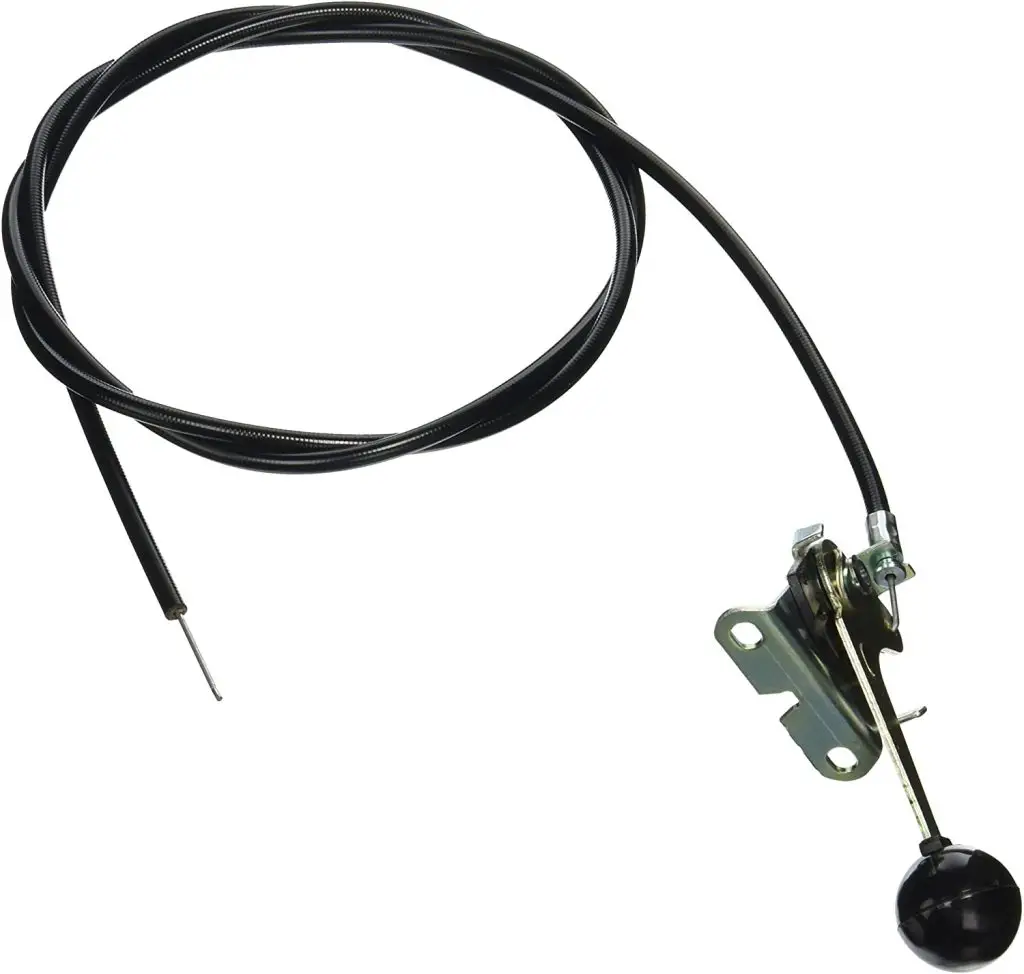
Basically, if you store the lawnmower for a longer period of time or run the mower at its high speed, the problem occurs at the throttle cable of the mower. A few simple steps can help you to fix the throttle cable.
Before going to the main fact, let’s see what you will need to fix the mower throttle cable.
Required tools:
- A screwdriver
- A measurement tape
- Socket wrench
- Pliers
Now, follow the steps outlined below to get the pepper solution.
Steps to follow:
Step #1: Check The Throttle Lever
Push the mower throttle lever back and forth to inspect the handle of the throttle lever move the cable.
Step #2: Remove The Air Filter Cover
Use a screwdriver to remove the cover of the air filter. It will help you to inspect the choke arm of the throttle.
Step #3: Measure The Distance
Now take measurement of the distance between the throttle choke arm and the throttle control lever. The distance should be 0-1 mm.
Step #4: Loosen The Cable Adjuster Nut
If the distance is more, then loosen the nut by using a socket wrench. Move the cable adjuster upward or downward to adjust the accurate distance.
Step #5: Tighten The Cable Adjuster Nut
The loosen nut basically holds the throttle cable. Use a plier and pull the throttle cable until it gets a perfect tension. Now, tighten the loosen nut by using the socket wrench.
Sometimes the throttle cable becomes stuck due to dirt and rust. With a stuck throttle cable, It becomes quite difficult to control the speed of the lawnmower.
Now, let’s see how to get rid of a stuck throttle cable.
Required tools:
- A screwdriver
- Pliers
- Socket wrench
- Penetrating oil
- Silicon lubricant
- A funnel
- Electrical tape
- Paper towel or rags
Follow the process described below to get rid of this issue.
Steps to follow:
Step #1: Disconnect And Observe The Throttle Cable
Disconnect the throttle cable both ends from your lawnmower. Carefully observe both ends of the throttle cable or take a photo for the reinstallation convenience.
Step #2: Attach The Funnel
Now, loosen the bracket that holds the throttle cable in the mower engine. Take the throttle cable engine end in your hand and place a funnel at the mouth of the cable. Attach the funnel with the cable mouth with electrical tape to make a seal.
Step #3: Apply Penetrating Oil
Place a pan under the opposite side of the cable. Pour an adequate amount of penetrating oil into the funnel. It will clear the dirt and rust inside the throttle cable. Wait until the penetrating oil is completely drained out from the throttle cable.
Step #4: Adjust The Throttle Inner Cable
After draining the oil completely, use a plier to grab the throttle inner cable. Pull it cable upward and downward until the cable moves freely.
Step #5: Apply Silicone Lubricant
Spray some silicone lubricant inside the cable. And when the cable becomes free, remove the funnel and reinstall the cable into its previous position.
That’s all. In this way, you can easily fix your lawnmower throttle cable.
Cautions
- Always unplug the spark plug before doing any kind of repair. It will save you from being electrified.
- Wear proper safety clothing such as hand gloves and goggles to avoid any kind of unwanted injury.
Final verdict
So, what’s going on in your mind now? I think fixing a lawnmower throttle cable is no more a troublesome task for you.
Hopefully, this article gave you a proper guideline on how to fix a lawn mower throttle cable. And now you can do this at home easily.
If you won’t be able to fix the throttle cable following the above-mentioned process, you just need to replace the cable totally.
Now, fix it at home and have fun!